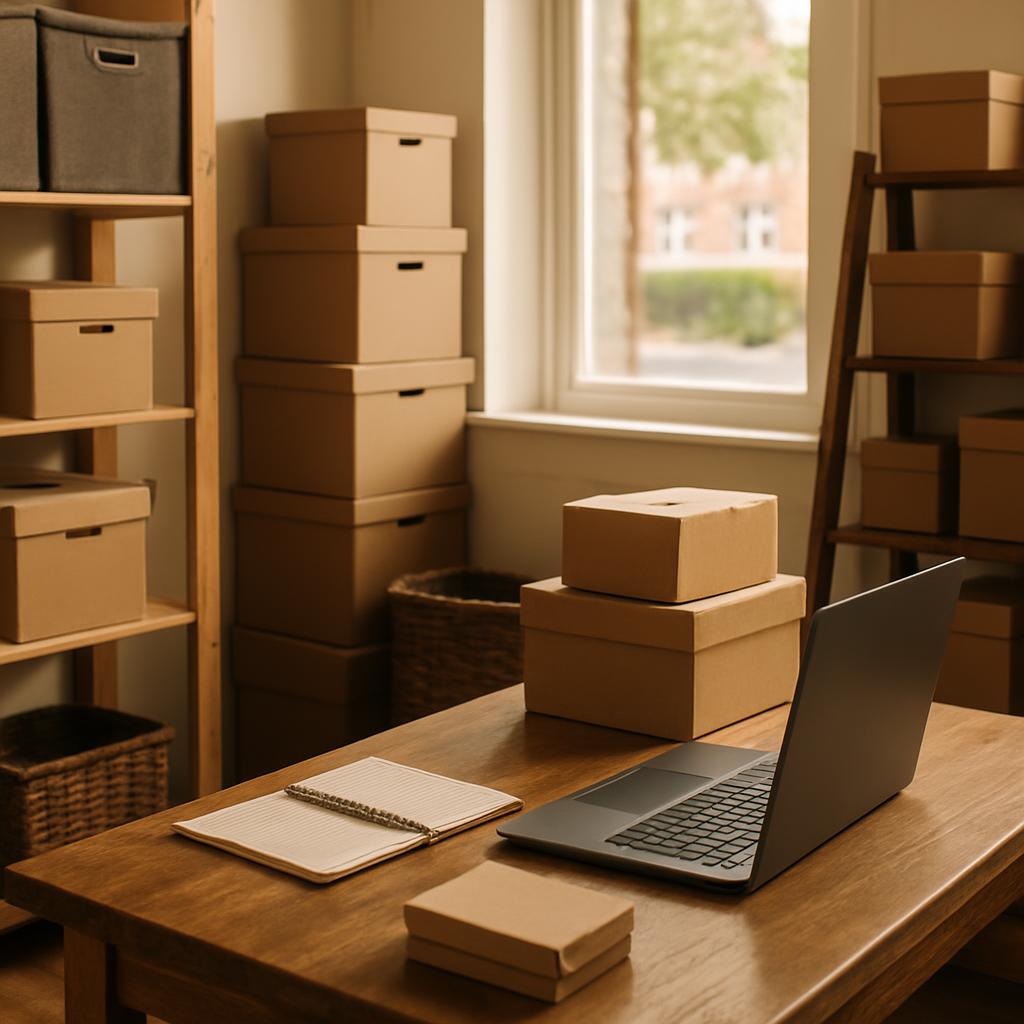
What South Shields Businesses Know About Storage
Find Out More →Walk past any busy retail unit around Westoe Crown Centre or down near the port, and you'll notice something: the successful ones aren't drowning in stock piled in corners or cluttering up the back office. They've got a system. They use self storage like it's part of their operation, not a backup plan. Most homeowners treat it the opposite way—stuffing a unit when they're desperate, without thinking about what goes in or how long it'll sit there. There's a real difference between the two approaches, and it's worth learning from how local South Shields businesses actually do this.
Why businesses have a storage plan and most of us don't
Retail shops, small manufacturers, and service businesses around South Shields can't afford to waste money on storage they don't use properly. If they're paying for space, they know exactly what's in it, why it's there, and when it's leaving. A business renting a unit at Self Storage South Shields treats it like a line item on a spreadsheet—tracked, purposeful, temporary or seasonal.
Homeowners usually book a unit when life gets messy: moving house, renovating, decluttering after a relationship ends, or holding onto things "just in case." None of that is wrong, but it often means you rent without a clear exit strategy. You don't inventory what's inside. You renew the contract because it's easier than deciding what to do with boxes you haven't opened in two years. As we've covered in this guide, that's one of the biggest mistakes South Shields residents make—treating storage as permanent when it should be temporary.
The lesson: before you rent anything, know what's going in, why, and when it's coming out.
How do businesses decide what actually needs storing?
This is where the business mindset really shows. A shop dealing with seasonal stock knows exactly which items go into storage and for how long. Seasonal decorations in January, summer stock in October, overflow from busy trading periods—it's all planned. They're not storing things out of habit or sentiment.
At home, we tend to keep things "in case we need them someday." That spare single bed frame, the Christmas boxes that never quite fit back in the loft, your partner's old university notes, flat-pack furniture that might get assembled eventually. It adds up fast, and before long you're renting space for things that could honestly be donated, recycled, or sold.
Businesses are ruthless about this because space costs money. They ask: will this sell? Do we need it this year? Is it taking up room we could use for something that makes us money? Homeowners could run through the same questions. Does this item have real value to your life right now? Will you actually use it, or are you holding it out of guilt?
The takeaway is practical: do an honest audit before you even contact Self Storage South Shields. If you wouldn't pay to store it, don't.
Storage that matches the job, not just the cheapest option
Businesses don't always pick the biggest or cheapest unit. They pick the one that fits their specific need. A retail business holding fashion stock for three months needs climate control so fabric doesn't fade or get damp. A tradespeople storing tools and equipment needs easy access—popping in and out twice a week. A manufacturer with overflow stock during peak season needs something different again.
Homeowners often assume smaller is cheaper, so they cram everything into a tiny unit. Then you can't actually get to half the stuff inside, you waste time reorganising, and you end up wishing you'd spent slightly more for better access or a bit more height. As we've outlined in our breakdown of pricing, there's a real difference between the unit cost and the actual value you get—especially when you factor in how easy it is to use regularly.
Think about what you'll actually need from your storage. Will you visit monthly, or just need it to sit until you move? Do your items need protection from damp? How much do you actually want to spend to avoid the hassle of disposing of something? Match the storage to your real life, not your budget spreadsheet.
The organised business approach: inventory and rotation
Here's a habit that separates efficient storage from storage chaos. Businesses keep records of what's in their unit. Not a detailed spreadsheet necessarily, but they know. They label boxes. They track when things went in and when they should come out. If seasonal stock needs to rotate, they know when.
Most home storage units are a mystery after the first month. You pack boxes, shove them in, close the door, and months later you can't remember what's in box seventeen. So you rent the space anyway, just in case. Read more here about how to set up storage that actually works—the difference between vague storage and functional storage is often just a simple system.
Take twenty minutes before you even rent the unit. Label everything clearly. Take a photo of the unit layout. Write down what's where. It sounds small, but it's the difference between storage that serves you and storage that just costs you money every month.
The real difference: treating storage like a tool, not a backup
Local South Shields businesses rent storage because they have a specific problem that needs solving for a defined time. They don't treat it as extra space they might need if life gets complicated. They treat it as part of how they operate, and that means being intentional about it.
You can borrow that mindset without overthinking it. Storage is useful—genuinely useful—when you know what you're solving for. A house renovation where you need to clear two rooms for six weeks. A house move where your new place isn't ready yet. Decluttering a property after a bereavement and needing three months to sort things. Keeping seasonal items separate from your living space. Those are all proper uses for self storage.
But if you're renting space indefinitely for things you're not sure about, that's when it stops being a tool and starts being an expense. The businesses around South Shields that use self storage well have already made that distinction—and paid attention to it.
If you're thinking about renting space or you've already got a unit that doesn't feel like it's working, bring that business-like clarity to it. What's the actual problem? How long do you really need the space? What's genuinely worth keeping? Once you've answered those, get in touch with Self Storage South Shields and find a unit that actually fits your life instead of becoming another bill you renew out of habit.
Looking for Self Storage near South Shields?
We have secure, flexible units available in the area. Get in touch with Self Storage South Shields today.
Find Out More →